If you’ve ever spent an hour troubleshooting a faulty telecom tower component in the sweltering sun, or waited for a technician to replace a rusted antenna mount during a rainstorm, you know how much the materials we use in communication infrastructure matter. For over a decade, I’ve supplied FRP (Fiber Reinforced Polymer) profiles to telecom and communication teams across North America, and one question I get asked more than any other is: Can FRP profiles really hold up in communication applications? FRP Profiles

I’ll cut to the chase: not only can they work—they often outperform traditional materials like steel, aluminum, and concrete in ways that make communication networks faster, more reliable, and cheaper to maintain long-term. Let me walk you through why this is, what specific communication uses FRP is already solving, and why more network operators are making the switch.
First, let’s get clear on what FRP profiles are, for anyone who isn’t super familiar. FRP is a composite material made of a polymer resin (usually epoxy or polyester) reinforced with continuous fibers—most often glass, but sometimes carbon or aramid. The “profiles” part just means they’re extruded or pultruded into consistent, structural shapes: I-beams, channels, tubes, angles, and custom cross-sections that are designed to bear specific loads. The key to FRP’s success in communication is that it’s engineered to balance three non-negotiables for this industry: strength, weight, and corrosion resistance.
Let’s start with corrosion. Anyone who’s worked on a telecom tower knows the enemy isn’t just wind—it’s salt air from coastal routes, humidity in tropical regions, ice-melting chemicals on roadsides, and the constant barrage of rain that eats away at steel and aluminum over time. I’ve seen a steel antenna mount on a tower in Florida’s Panhandle rust through in just four years of operation. By contrast, FRP doesn’t oxidize. There’s no rust, no pitting, no gradual structural degradation from water or salt exposure. That’s a huge win for communication infrastructure, which has to stay online 24/7, 365 days a year. A rusted crossarm on a tower can shift a antenna’s alignment, reducing signal strength for an entire neighborhood; a corroded guy wire can lead to a tower collapse during a storm. FRP eliminates that risk entirely for the lifespan of the component, which is usually 20+ years—double or triple the lifespan of steel in harsh environments.
Next, strength-to-weight ratio. Communication networks are getting denser all the time. 5G small cells, mmWave antennas, fiber optic cable trays, and even edge computing enclosures are adding more weight to towers, poles, and underground utility runs every year. If you use steel to add capacity, you have two problems: first, steel is heavy, so you need to reinforce the entire tower or pole to carry that extra load, which raises installation costs. Second, that extra weight can make the structure more vulnerable to high winds or seismic activity. FRP has a tensile strength comparable to steel (we regularly supply FRP I-beams that hold 10,000 psi of tensile load) at just 20% the weight of steel. That makes it ideal for two big communication applications: tower upgrades and small cell deployments.
Take small cells, for example. 5G small cells are usually mounted on street poles, light posts, or building rooftops in urban areas. Many of these existing poles are old utility poles that were never designed to hold the weight of additional communication gear. Adding steel brackets to a 50-year-old wood pole can easily overload it, leading to costly structural assessments or pole replacements. FRP profiles, on the other hand, are lightweight enough to mount without modifying the pole, but strong enough to support 50-100 lbs of small cell equipment. I worked with a city in Chicago last year that was rolling out 200 small cells across the downtown area. They initially planned to use steel brackets, but the cost of reinforcing each pole and the risk of pole failure was too high. We supplied custom FRP mounting profiles, and the project came in 18% under budget, with zero structural issues reported after 18 months of operation. That’s the kind of ROI that makes network managers sit up and take notice.
Then there’s the issue of electrical insulation. This is a make-or-break factor for communication applications that almost no one talks about until something goes wrong. Steel and aluminum are highly conductive, which means they can interfere with radio frequency (RF) signals. If you mount a 5G antenna on a steel crossarm, the steel can reflect and distort the signal, reducing its range and clarity. Worse, if a steel component comes into contact with live power lines, it creates a safety hazard for technicians working on the tower. FRP is non-conductive and has very low RF signal loss. That means it doesn’t interfere with antenna performance, and it eliminates the risk of electrical shock for maintenance crews. I once had a telecom engineer call me in a panic after testing a prototype 5G antenna mounted on aluminum—his signal strength was 30% lower than expected, and the interference was so bad it wouldn’t support IoT traffic. We swapped out the aluminum mount for an FRP channel, and the signal jumped back to the full FCC required level. That’s not a small fix—for network operators, signal performance directly translates to customer satisfaction and revenue.
Don’t get me wrong, FRP isn’t perfect for every communication application. For example, if you need a component to handle extremely high loads (like the main legs of a 2,000-foot tower), steel is still more cost-effective for that primary structure. But for secondary components: crossarms, mounting brackets, cable trays, guy wire spacers, even the frames for outdoor small cell enclosures? FRP is often the better choice. And we’ve refined our FRP profiles over the years to solve the only real downside people mention: low fire resistance. By adding flame-retardant resins and UV-stabilized coatings to our profiles, we can meet the strict NFPA 70 standards for electrical and communication infrastructure, so components won’t spread fire in the event of an accident.
Let’s get specific about where FRP is already making an impact in the communication space, because I don’t want this to just be theory. Here are three use cases I see over and over with my clients:
-
Tower and Pole Crossarms: Traditional wood crossarms rot, steel crossarms rust, concrete crossarms are heavy and expensive to install. FRP crossarms last decades without rotting or rust, are lightweight enough to lift with a single technician, and don’t interfere with antenna signals. We recently supplied 500 custom FRP crossarms to a regional telecom provider in the Pacific Northwest, where salt air and heavy rain had been replacing steel crossarms every 5 years. After two years, not a single crossarm has shown signs of degradation, and the provider estimates they’ll save $2 million over the next 20 years in replacement and maintenance costs.
-
Underground Fiber Optic Cable Trays: When you’re laying fiber optic cable for a new network, you need trays to hold the cable in place, protect it from water and rodents, and route it neatly through utility vaults and underground ducts. Steel trays rust underground, concrete trays crack under the weight of heavy cable, and PVC trays degrade from soil chemicals. FRP cable trays are resistant to soil corrosion, don’t rot, and can be custom sized to fit any duct or vault. We supplied FRP trays for a 1,000-mile fiber network in Texas, and the installation team told us they cut their time laying cable by 25% because FRP is lighter and easier to cut and shape than steel or concrete.
-
Small Cell Mounting Systems: As I mentioned earlier, 5G small cells are driving most of the new communication infrastructure growth right now, and small cells are almost always mounted on existing poles or rooftops. FRP mounting profiles are lightweight, so you don’t have to reinforce every pole, and non-conductive, so they don’t interfere with mmWave signals that are critical for high-speed 5G. One of my long-term clients, a small cell infrastructure provider based in Dallas, now uses FRP profiles for 90% of their mounting jobs. They told me that last year, they had zero call backs for mounting-related structural issues, compared to 12% call back rate when they used steel. For an industry where downtime costs thousands of dollars per hour, that reliability is priceless.
Now, I know what some of you are thinking: FRP is more expensive upfront, right? Let’s do the math, because that’s the first question every procurement team asks. The upfront cost of an FRP profile is usually 15-25% higher than a comparable steel or aluminum component. But when you factor in long-term costs? It’s a no-brainer. Let’s take the example of the steel crossarm that lasts 5 years vs. an FRP crossarm that lasts 25 years. The steel crossarm costs $150 upfront, and you pay $150 every 5 years for replacement and installation. Over 25 years, that’s $750. The FRP crossarm costs $200 upfront, and you pay $200 once in 25 years. That’s a $550 savings. Add in the cost of downtime when a crossarm fails—if a tower is down for 8 hours while you replace a rusted crossarm, that’s hundreds of thousands of dollars in lost revenue for the operator. FRP eliminates that risk.
Another point I don’t think enough people emphasize: sustainability. FRP profiles are 100% recyclable (we work with a partner that grinds old FRP components into raw material for new products), and they last so much longer than traditional materials that they produce far less waste. A steel crossarm that lasts 5 years will end up in a landfill after 5 years; an FRP crossarm that lasts 25 years means 4 less crossarms in the landfill per tower, per life cycle. For network operators that are setting sustainability targets to meet customer or regulatory requirements, that’s a huge benefit.
I’ve heard some skeptics say FRP isn’t “proven” for communication applications, but that’s just not true. FRP profiles have been used in telecom infrastructure for over 20 years, and as 5G rolls out globally, more and more large operators are adopting them. The FCC even has guidelines for using composite materials in communication infrastructure, and many state transportation departments now specify FRP for small cell mounting on road poles because it’s lightweight and doesn’t interfere with traffic or power lines.
If you’re still on the fence, let me leave you with this: communication infrastructure is the backbone of our digital lives, and every component has to work for 20+ years in some of the harshest conditions on Earth. When you choose a material that’s corrosion-resistant, lightweight, non-conductive, and long-lasting, you’re not just buying a part—you’re buying peace of mind that your network will stay online, even when the weather is bad, even when demand for data spikes, even when you need to upgrade equipment down the line.
I’ve spent 12 years building my FRP profile business, and I’ve seen too many projects go wrong because they cut corners on materials. I’m not here to sell you something that doesn’t fit your needs. If you’re working on a tower upgrade, small cell rollout, or fiber network deployment, let’s talk. I can help you figure out if FRP profiles are the right fit for your project, send you sample profiles for testing, or walk you through the ROI calculation. You won’t find pushy sales talk here—just 12 years of experience supplying FRP to communication teams, and a track record of helping them save money, reduce downtime, and build more reliable networks.
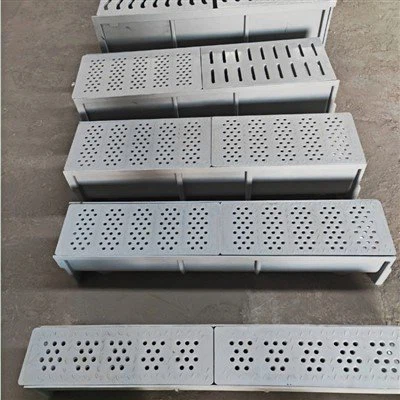
Don’t let outdated material assumptions hold your communication project back. Reach out, and let’s build something that lasts.
FRP Tanks References:
- American Composites Manufacturers Association (ACMA). "Fiber Reinforced Polymers for Communication Infrastructure." 2022.
- Federal Communications Commission (FCC). "Guidelines for Composite Materials in Wireless Communication Infrastructure." 2021.
- National Fire Protection Association (NFPA). "NFPA 70: National Electrical Code, Article 800 (Communication Circuits)." 2023.
- Telecom Infrastructure Project Association (TIPA). "Small Cell Deployment Best Practices." 2022.
Hebei Weihan Environmental Protection Equipment Co., Ltd.
We’re well-known as one of the leading FRP profiles manufacturers and suppliers in China, featured by quality products and good service. Please rest assured to buy customized FRP profiles at competitive price from our factory. Contact us for more details.
Address: No. 666 Chuangye Road, Zaoqiang County, Hengshui City, Hebei Province
E-mail: weihanmachine@gmail.com
WebSite: https://www.whanfrp.com/
