Hey guys, it’s Mia from your go-to finned tube supplier. If you’ve ever worked in industries like oil & gas, chemical processing, or even HVAC, you know multi-phase flow isn’t just messy—it’s a total headache. I’ve had so many clients hit me up saying their heat exchangers act wonky when stuff isn’t just a single fluid (like water or gas) moving smoothly. That’s where finned tubes step in, and let me break down how they actually work through that chaotic mix of liquid, gas, maybe even bits of solid gunk—no jargon overload, promise. Finned Tube
First, let’s get real about multi-phase flow. It’s not just “a few things moving together”—you’ve got at least two states right there: say, oil and gas bubbling through a pipeline, or water and steam sloshing around in a reboiler. The problem here? When you’re trying to transfer heat, multi-phase flow kills efficiency fast. Bubbles can block heat surfaces, liquids can form thick films that insulate, and that mix doesn’t stick to the uniform flow single-phase systems rely on. Plain old bare tubes used to be the fix, but they’re garbage at grabbing heat from that messy mix—you end up needing way more tube material, higher energy bills, and way more downtime for cleaning or fixes. That’s where finned tubes come in, and why every industrial ops manager worth their salt is switching.
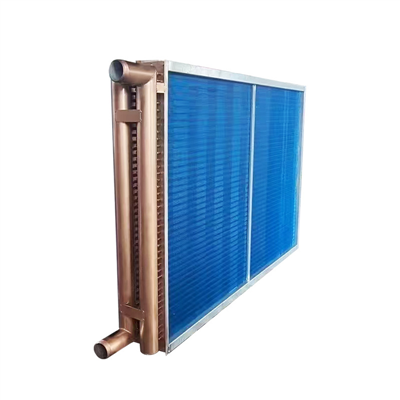
So how do finned tubes handle this chaos? Let’s start with the basics: a finned tube is just a plain tube with those little metal fins welded or wrapped around its outer surface (or inner, depending on the use—we do both, btw). But when multi-phase flow hits, those fins don’t just look cool—they game-changing. Let’s break it down step by step. First, heat transfer area. Fins add way more surface than a bare tube—like, 2 to 10 times more, depending on the fin type (we do helical fins, annular, even low-finned for specific uses). But here’s the multi-phase-specific part: those extra surfaces create tiny, consistent turbulence in the flow. When you’ve got gas bubbles or liquid films moving along, the fins act like little “mixers” that break up stagnant layers—no more insulating films clinging to the tube wall, no more big bubbles blocking heat transfer. That’s a huge win because stagnant flow is the #1 efficiency killer in multi-phase systems.
Wait, let’s get a little specific to the multi-phase mess. Take a common scenario: two-phase flow of steam and condensate, like in a power plant’s condenser, or crude oil and natural gas flowing through a pipeline heat exchanger. On a bare tube, the condensate would spread into a thin, slow-moving film that sits right on the tube—hard for heat to jump from the tube wall to the fluid. But on a finned tube, those fins disrupt that film. The condensate gets pulled into the gaps between fins, flows faster, and the steam hits more exposed metal surfaces, so heat transfers way quicker. For gas-liquid mixes, the fins break up large gas bubbles into smaller ones, which spread evenly through the flow instead of clustering in the middle—no more dead zones where heat can’t get through. And if there’s solid particles (like sediment in crude oil), the fins create slight scrubbing action as the flow moves, which prevents solids from building up on the tube wall (fouling, that’s the word). Less fouling means your system runs longer between cleanings, which cuts maintenance costs big time.
Now, let’s talk fin design, because not all fins are made equal for multi-phase flow. I’ve seen clients come in with cheap off-the-shelf fins that actually made their multi-phase problems worse. For example, too-short fins: they don’t create enough turbulence, so the liquid films still cling. Too-spaced fins: gas bubbles can slip right through the gaps without breaking up. That’s why at our shop, we custom-engineer fins based on the exact multi-phase mix your dealing with. If you’re handling wet natural gas (that’s gas with liquid droplets, super common in oil fields), we use annular fins with a tight pitch to catch those droplets and move them away from the heat surface. If you’re dealing with slurry (liquid plus solid particles, like in mining), we use thick, welded fins that can handle the slight abrasion, plus a helical shape that pushes solids along the tube so they don’t settle. We even do internal fins for some multi-phase applications—little fins on the inside of the tube to agitate the flow coming in, so it’s not a calm, slow-moving mix that loses heat fast.
Let me throw in a real client example to make this concrete. A refiner client of ours was using bare tubes in their crude preheat exchanger, which had a mix of heavy oil, gas, and small solid sediments. They were only hitting 65% heat efficiency, and had to shut down for cleaning every 3 weeks because of fouling. We swapped in our custom helical finned tubes—pitch spaced just right for their multi-phase mix, fins welded to handle the solids. Three months later? Efficiency jumped to 88%, and their cleaning intervals stretched to 10 weeks. That’s not a number I made up—they told me that themselves. The fins broke up the heavy oil films, dispersed the gas bubbles evenly, and the slight turbulence pushed the solids away from the tube wall. Simple as that.
Wait, but let’s address a common myth I hear all the time: “Finned tubes add more pressure drop, so my pump will work harder in multi-phase flow.” Yeah, that used to be a problem with old fin designs—too many fins crammed too close, made the flow fight through the gaps. But modern fin engineering fixes that. We use computational fluid dynamics (CFD, don’t panic, it’s just simulation software) to test fin pitch, height, and shape for each specific multi-phase mix. So we add just enough fins to boost heat transfer without creating unnecessary resistance. In that refiner example, their pump energy use actually went down a little—because better heat transfer meant they didn’t have to run the preheat system as hard. That’s a win-win I didn’t even expect at first.
Another thing: multi-phase flow can be unpredictable. One minute it’s mostly liquid, the next it’s mostly gas—like when a pipeline has slug flow (big slugs of liquid and gas alternating). Finned tubes handle that way better than bare tubes because their extra surface area is adaptable. When it’s gas-heavy, the fins have enough metal to catch heat from the gas. When it’s liquid-heavy, the fins disrupt any stagnant layers so heat can move fast. Bare tubes can’t shift like that—you’re overdesigned for one end of the mix and underdesigned for the other.
Now, let’s get to when you should actually use finned tubes for multi-phase flow. If your system is dealing with gas-liquid mixes (oil & gas pipelines, condensers, evaporators), liquid-solid mixes (slurry heat exchangers), or even three-phase mixes (oil, gas, water in refineries), finned tubes are almost always the better call. The only time I’d tell a client to skip them? If their flow is super low-velocity single-phase, but let’s be real—most industrial applications these days have at least some multi-phase component, even if they don’t realize it.
A lot of clients come to me not sure if finned tubes will work for their specific mix, and I get it—every system is different. That’s why we don’t push a one-size-fits-all. We’ll ask you what fluid mix you’re dealing with, flow rates, operating temperature and pressure, and any pain points you’re having (fouling? low efficiency? frequent downtime) and build a finned tube that fits exactly. We’ve worked with everyone from small chemical plants to big multinational oil companies, so we’ve seen pretty much every multi-phase scenario out there.
At the end of the day, finned tubes aren’t just a “better bare tube” — they’re engineered solutions for the mess that is multi-phase flow. They fix stagnant layers, break up clumpy bubbles, reduce fouling, and keep efficiency high when other designs fail. If you’re dealing with any system where multi-phase flow is causing headaches, let’s chat. No sales pitches, just figuring out what you need and sending over a quote that makes sense.
Evaporator References:
- Hewitt, G. F. (1998). Multiphase Flow and Heat Transfer. Taylor & Francis.
- Kakac, S., & Shah, R. K. (1988). Handbook of Single-Phase Convective Heat Transfer. Wiley.
- Zukauskas, A. (1989). Heat Transfer from Tubes in Cross Flow. Hemisphere Publishing.
- American Society of Mechanical Engineers (ASME). (2021). Finned Tube Heat Exchanger Design Standards.
Xiangshui Derkang Refrigeration Equipment Co., Ltd.
As one of the most professional finned tube manufacturers in China, we’re featured by quality products and low price. If you’re going to buy discount finned tube, welcome to get quotation from our factory. We also accept customized orders.
Address: No. 2, Xiaojian Town Entrepreneurship Park, Xiangshui County
E-mail: 505745223@qq.com
WebSite: https://www.xsderk.com/
