Hey there! I’m a supplier of telescopic tracks, and today I wanna chat about whether telescopic tracks are suitable for intermittent motion applications. Let’s dive right in! Telescopic Track
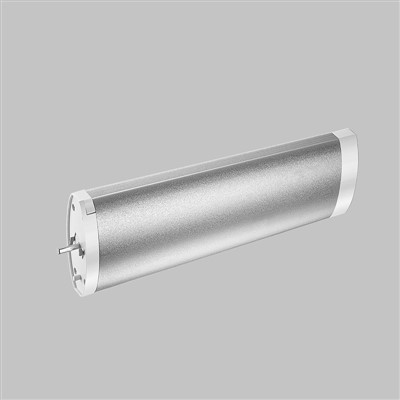
First off, let’s understand what intermittent motion applications are. These are situations where the movement isn’t continuous. Think of a machine that moves forward, stops to perform a task, then moves again. It could be in manufacturing lines, robots that pick and place items, or even some types of mobile equipment that need to pause at specific intervals.
So, why might telescopic tracks work well in intermittent motion applications?
One major advantage is their flexibility. Telescopic tracks can extend and retract as needed. In an intermittent motion setup, the equipment might only need to cover a short distance during each movement phase. With telescopic tracks, the length can be adjusted according to the specific task at hand. For example, in a small – scale manufacturing unit where a robotic arm on telescopic tracks is used to pick components from a short conveyor belt, the tracks can be retracted when the arm is at rest, saving space. And when it’s time to move to pick a part, the tracks can extend to the required length, providing a stable platform for the movement.
Another benefit is the precision. In many intermittent motion applications, accuracy is key. Telescopic tracks are designed to offer smooth and precise movement. They can be engineered to have very tight tolerances, ensuring that the equipment on them stops and starts at exactly the right positions. This is crucial in applications like circuit board assembly, where a robotic device on telescopic tracks needs to place tiny components with extreme precision. The tracks can be controlled to move in small, incremental steps, allowing for accurate positioning every time.
Durability is also a plus. Intermittent motion doesn’t put as much continuous stress on the tracks as continuous – motion applications. Telescopic tracks are built to withstand the forces of starting and stopping. They’re made from high – quality materials like steel or aluminum, which can handle the repeated impacts and vibrations associated with intermittent movement. For instance, in a construction site where a small telescopic – tracked vehicle is used to move materials in short bursts between different work areas, the tracks can endure the rough terrain and the frequent starts and stops without wearing out quickly.
However, there are also some factors to consider that might make telescopic tracks less suitable for certain intermittent motion applications.
Cost can be an issue. Telescopic tracks are more complex than regular tracks, and their manufacturing involves more intricate processes. This means they’re generally more expensive. For small – budget projects or applications where the intermittent motion is very simple, the cost of telescopic tracks might be prohibitive. A small – business owner looking to set up a basic product – sorting system might find that the cost of installing telescopic tracks is too high compared to the overall budget of the project.
Maintenance is another aspect. Telescopic tracks have more moving parts compared to traditional tracks. This means there are more areas that can potentially malfunction. In an intermittent motion application, the frequent starts and stops can cause accelerated wear and tear on the joints and mechanisms within the telescopic tracks. Regular maintenance is necessary to keep them in good working condition. For a business that runs on a tight schedule and doesn’t have much time for maintenance, this could be a drawback.
Complexity of installation is also a consideration. Installing telescopic tracks isn’t as straightforward as putting in regular tracks. It requires a certain level of technical expertise to ensure that the tracks are installed correctly and that the control systems for the extension and retraction work properly. In a situation where a company wants to quickly set up an intermittent motion system, the time and effort required for installing telescopic tracks might be a deterrent.
Now, let’s look at some real – world examples to better understand the suitability of telescopic tracks for intermittent motion applications.
In the automotive industry, telescopic tracks are used in some assembly lines. Robots on these tracks move intermittently to perform tasks like welding, painting, or installing parts. The ability to adjust the length of the tracks allows for a more efficient use of space in the assembly area. The robots can move closer to the vehicle when needed and then retract to make way for other operations. The precision of the telescopic tracks ensures that the welding and installation tasks are carried out accurately.
In the logistics sector, automated guided vehicles (AGVs) with telescopic tracks are used for intermittent motion. These AGVs move around warehouses, picking up and dropping off pallets at different locations. The telescopic tracks enable the AGVs to reach into narrow aisles and adjust their position according to the storage layout. They can stop at each storage location precisely to load or unload the pallets.
So, are telescopic tracks suitable for intermittent motion applications? The answer is, it depends. If your application requires flexibility, precision, and can afford the cost and maintenance, then telescopic tracks can be a great choice. They offer unique advantages that can enhance the efficiency and accuracy of intermittent motion systems. But if you’re on a tight budget, short on maintenance time, or need a very simple and quick – to – install solution, you might want to explore other options.

If you’re interested in learning more about how telescopic tracks can fit into your intermittent motion applications, or if you want to discuss a potential purchase, don’t hesitate to reach out! We’re here to help you find the best solution for your needs.
Telescopic Track References
- Smith, J. (2022). "Advanced Track Systems in Industrial Applications". Industrial Machinery Journal.
- Johnson, A. (2023). "Telescopic Mechanics: Understanding the Basics". Mechanical Engineering Review.
Guangdong Langsen M.&E. Co., Ltd.
As one of the most professional telescopic track manufacturers and suppliers in China, we’re featured by quality products and good service. Please rest assured to wholesale customized telescopic track made in China here from our factory. Contact us for more details.
Address: No. 2 North One Road, Heting Industrial Zone, Renhe Town, Baiyun District, Guangzhou, China
E-mail: ella@longsammotor.com
WebSite: https://www.langsenmotor.com/
