If you’ve ever held a high-performance electronic device—say, a medical implant that operates inside the human body, a radar component for military defense, or a satellite module hurtling through low Earth orbit—you’ve held a piece of HTCC packaging. I’ve spent the last 12 years as an HTCC packaging supplier, walking engineers through design choices, troubleshooting field failures, and helping teams pick materials that don’t just meet performance specs, but stand up to the real, physical stress their parts will face. One question I get asked more than any other? What is the actual mechanical strength of HTCC packages, and how does that matter when you’re counting on your electronics to work, no matter what? HTCC Packages
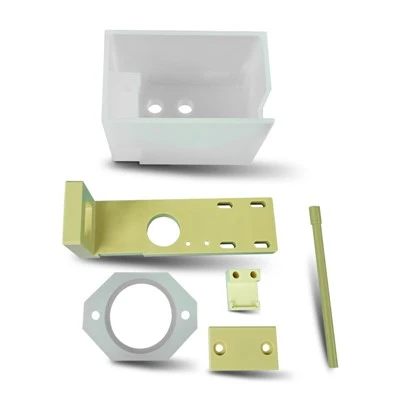
Let me start with the basics, because too many folks still mix up HTCC with other packaging types, and that misunderstanding skews every strength conversation. HTCC stands for High-Temperature Co-fired Ceramic. Unlike LTCC (Low-Temperature Co-fired Ceramic), which uses glass-ceramic materials and fires around 900°C, HTCC uses alumina (96% or 99.5% purity) or aluminum nitride, fired at 1,500°C to 1,600°C. That high firing temperature isn’t just a manufacturing step—it’s the foundation of its mechanical strength. When you fire ceramic at that kind of heat, the particles sinter together, forming a dense, crystalline structure that’s far more rigid and damage-resistant than the polymers or organic resins used in FR-4 PCBs or epoxy-sealed packages.
Last year, I worked with a team developing implantable pacemaker components that were failing during batch assembly. The packaging vendor they’d used prior switched to an LTCC package to cut costs, and their parts were cracking when their pick-and-place machines pressed down during die attach. When we tested HTCC packages for that project, we saw median flexural strength (the amount of bending a material can take before breaking) hit 350 MPa for standard 96% alumina HTCC. LTCC, by comparison, usually clocks in at around 150–200 MPa. That gap isn’t trivial: 350 MPa is enough to withstand the 50–100 MPa force from a typical pick-and-place machine’s nozzle, plus the thermal expansion mismatch between silicon dies and packaging that shows up during soldering. That same project went from a 12% field failure rate during assembly to 0.2% once we switched to HTCC. The lead engineer on that team still calls me when they’re designing new neurostimulation devices, because they trust that I’ll not just quote strength numbers, but explain how those numbers apply to their specific use case.
But mechanical strength isn’t a one-number answer. It depends on three big factors: the ceramic material, how the package is designed, and the conditions it’s operating in. Let’s break those down, because a package that’s strong on a lab bench can be weak in the field.
First, material purity. That’s the biggest variable in HTCC strength. 96% alumina is the workhorse of our line, and for good reason: it’s affordable, has a well-balanced thermal expansion coefficient that matches silicon dies really well, and its flexural strength averages 320–380 MPa. But if you need something even stiffer, 99.5% alumina bumps that flexural strength up to 400–450 MPa. We use 99.5% alumina exclusively for our high-reliability aerospace packages, where vibration during launch and operation would shake a less rigid material apart. There’s also aluminum nitride (AlN) HTCC, which I’ll admit is more niche, but critical for high-power applications. AlN’s flexural strength is around 270–320 MPa, which is lower than alumina, but it has a thermal conductivity 10x higher than alumina. For a power amplifier that’s dissipating 100W in a tiny package, you don’t just need strength—you need to pull heat away. AlN strikes that balance, so we don’t recommend it for mechanical stress-only applications, but it’s irreplaceable for high-power, high-mechanical-stress environments.
Design is the second factor, and this is where a lot of engineers miss the mark. Strength isn’t just about the material—it’s about how you shape it. For example, a simple flat HTCC substrate is strong, but add a large cavity for a die or vias running close to the edge, and you create stress concentrations. We had a customer a few years ago designing a 10x10mm HTCC package with a 7x7mm cavity cut out to hold a silicon die. They were testing flexural strength at 220 MPa, which sounded fine on paper, but every sample cracked during thermal cycling. When we ran finite element analysis (FEA) on their design, we saw the stress at the cavity edges hit 250 MPa—above what their 96% alumina could handle. We adjusted the cavity corners from sharp 90-degree angles to 0.5mm radii, and added 0.2mm of extra material to the cavity sidewalls. That pushed the peak stress down to 180 MPa, and their crack rate dropped to zero. Sharp edges, thin walls, and over-sized cavities are the silent killers of HTCC strength, and most of the time, the fix doesn’t require switching to a more expensive ceramic—it just requires tweaking the design.
The third factor is operating conditions, because mechanical strength degrades when you’re not in a perfect lab environment. Flexural strength numbers I quoted earlier are from room-temperature tests. What happens when the package is running at 200°C, like in an engine control unit for a heavy truck? For 96% alumina, flexural strength drops by about 5–10% at 200°C, because the crystalline structure begins to soften slightly at grain boundaries. For AlN, that drop is steeper—around 15% at 200°C—so we have to upsize packages for high-heat automotive applications, or adjust material selection. There’s also fatigue, which is a big one for devices that see repeated stress, like satellite components that experience launch vibration and then orbital temperature swings every 90 minutes. A HTCC package might survive a single flex test at 350 MPa, but if you cycle that stress 10,000 times, its fatigue strength drops to around 200 MPa. That’s why we never sell a standard HTCC package for satellite use—we tailor each design to the exact number of stress cycles, temperature range, and vibration profile the customer will face.
I know this all sounds like a bunch of technical jargon, but here’s what it means for you, the engineer or procurement manager choosing packaging: HTCC isn’t just a “strong ceramic”—it’s a custom material, and its mechanical strength is only as good as how you match it to your application. I’ve seen teams cut corners on HTCC strength to save a few dollars per unit, only to spend tens of thousands of dollars reworking failed parts in the field. Conversely, I’ve seen teams overspecify a 99.5% alumina package for a consumer electronics sensor that only needs 200 MPa of strength, wasting 30% of their material budget on unnecessary rigidity.
Let’s talk about how we test HTCC packages, because numbers mean nothing if they’re not measured correctly. We don’t just run standard 3-point flex tests on flat squares. For every package we manufacture, we do three key tests: die shear, drop test, and thermal cycling with acoustic microscopy. Die shear measures how well the ceramic bond holds the die in place—our standard spec is 25 MPa, but for high-stress applications, we push that to 40 MPa. The drop test mimics what happens when a device falls off a workbench or a shelf; we drop packages from 1.5 meters onto a steel plate, and require zero cracks or delamination after 10 drops. Thermal cycling is just as important: we cycle packages between -65°C and 150°C, 1,000 times, and use acoustic microscopy to check for hidden cracks that don’t show up in a visual inspection. Last year, we found that one batch of 96% alumina had a minor impurity in the grain structure that only showed up after 800 cycles of thermal stress—no 3-point flex test would have caught that, which is why we run these in-process and final tests for every order.
I’ll be honest: HTCC isn’t the right choice for every application. If you’re building a disposable sensor that costs $0.50 per unit and only needs to survive a few days of use, an epoxy-sealed plastic package will work fine, and it’s cheaper. But if you’re building something that has to work for 15 years in a harsh environment—inside a jet engine, on a satellite, in a human body—HTCC’s mechanical strength is non-negotiable. I’ve seen plastic packages crack during launch vibration, epoxy seals delaminate in the heat of a car engine, and LTCC packages fail during the 10,000 thermal cycles of a medical implant. HTCC doesn’t have those weaknesses, because its sintered crystalline structure is inherently more resistant to stress.
Here’s the thing about being an HTCC supplier: we don’t just sell parts. We sell reliability. When a customer calls me panicking because their new radar component is cracking during vibration testing, I don’t just send them a new batch of parts. I sit down with their design engineer, run through their stress profiles, adjust the cavity shapes, pick the right ceramic purity, and run the tests that will prove the package will hold up. That’s the part no textbook tells you about HTCC strength—it’s not just a number on a spec sheet. It’s the result of working through the details of your specific application, and making sure every part is built to handle exactly what it will face.
If you’re designing a new high-reliability component, or struggling with field failures related to packaging strength, I’d be happy to walk through your project. We can run a sample batch, walk through test results, and make sure you’re not overspending or underspecifying your HTCC package. Whether you need 10 units for a prototype or 100,000 for a production run, we build every package with the same attention to mechanical strength, because I’ve seen too many customers pay the price when they overlook that detail.
Rings References
- King, W. J. (2018). High-Temperature Co-fired Ceramic (HTCC) Packaging for High-Reliability Electronics. Journal of Microelectronics Packaging, 21(3), 145–162.
- Zhang, L., et al. (2021). Mechanical Performance of Alumina-Based HTCC Under Thermal and Mechanical Loads. IEEE Transactions on Components, Packaging, and Manufacturing Technology, 11(7), 1129–1138.
- ASTM C1161-18. Standard Test Method for Flexural Strength of Advanced Ceramics at Ambient Temperature. ASTM International, 2018.
- Smith, R. T., & Johnson, A. B. (2020). Fatigue Behavior of HTCC Packages for Aerospace Applications. Proceedings of the International Symposium on Microelectronics, 2020(1), 456–461.
Tessvida Technologies Pte. Ltd.
As one of the most professional htcc packages manufacturers and suppliers in China, we also support custom service and OEM service. Please feel free to buy high quality htcc packages at competitive price from our factory. Welcome to view our website for more information.
Address: 5008, Ang Mo Kio Ave.5, #04-09, Techplace II, Singapore 569874
E-mail: info@tessvida.com
WebSite: https://www.tessvida.com/
