Hey there! As a supplier of ultra thin relays, I often get asked about the soldering methods for these nifty components. So, I thought I’d share some insights on what you can use when dealing with surface – mounting ultra thin relays. Ultra Thin Relay
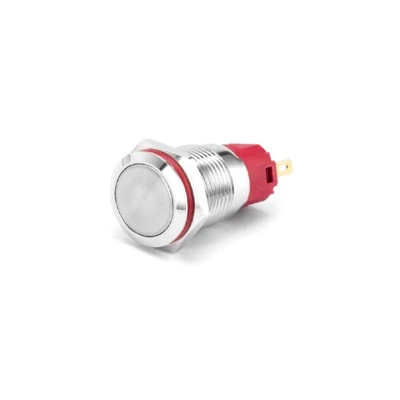
First off, let’s talk about the importance of proper soldering. Ultra thin relays are delicate little things. They’re designed to be super compact, which means the soldering process needs to be spot – on. If you mess up the soldering, it can lead to all sorts of problems, like poor electrical connections, mechanical instability, or even damage to the relay itself.
One of the most common soldering methods for surface – mounting ultra thin relays is reflow soldering. Reflow soldering is a process where you use a solder paste that contains tiny solder particles suspended in a flux. You start by printing the solder paste onto the printed circuit board (PCB) pads where the relay will be placed. This is usually done with a stencil. The stencil has holes cut out in the shape of the pads, so when you spread the solder paste over the stencil, it gets deposited exactly where it needs to be.
After the solder paste is on the PCB, you pick and place the ultra thin relay onto the pads with the solder paste. The pick – and – place machines are really precise these days, and they can place the relays in the right position with high accuracy. Once the relay is in place, the PCB goes into a reflow oven.
The reflow oven has different temperature zones. At first, the board is heated slowly to evaporate any solvents in the solder paste and to activate the flux. The flux is important because it cleans the surfaces of the PCB pads and the relay leads, removing any oxides or contaminants. Then, the temperature is raised to the melting point of the solder. As the solder melts, it forms a strong bond between the relay leads and the PCB pads. Finally, the board is cooled down gradually, allowing the solder to solidify properly.
Reflow soldering has a lot of advantages. It’s a high – volume process, so it’s great for mass production. It provides consistent and reliable solder joints because the temperature profile can be carefully controlled in the reflow oven. And since the soldering is done all at once, it’s relatively fast.
However, there are also some drawbacks. The equipment for reflow soldering, like the pick – and – place machines and the reflow oven, can be expensive. You also need to be careful with the temperature profile. If the temperature is too high or the time at the high temperature is too long, it can damage the ultra thin relay. And if it’s too low, the solder may not melt properly, resulting in cold solder joints.
Another soldering method that can be used is wave soldering. Wave soldering is a bit different from reflow soldering. In wave soldering, you first apply flux to the bottom side of the PCB. Then, the PCB is passed over a wave of molten solder. The wave of solder is created by a special machine that pumps the molten solder up through a nozzle to form a wave. As the PCB passes over the wave, the solder adheres to the exposed pads and leads, creating the solder joints.
Wave soldering is also a popular choice for mass production. It can handle a large number of PCBs in a relatively short time. It’s also less expensive in terms of equipment compared to reflow soldering, especially for smaller production runs.
But wave soldering also has its limitations. It’s not as precise as reflow soldering. Since the whole bottom side of the PCB is exposed to the molten solder wave, there’s a risk of solder bridging, which is when the solder forms an unwanted connection between two adjacent pads or leads. For ultra thin relays, which have very small leads and closely spaced pads, solder bridging can be a real problem. Also, the high – temperature environment of wave soldering can be a bit harsh on the ultra thin relays, and there’s a need to protect the components from overheating.
For smaller production runs or prototype work, hand soldering can be an option. Hand soldering is exactly what it sounds like – you use a soldering iron to heat the solder and create the joints. This method gives you a lot of control. You can carefully solder each lead of the ultra thin relay one by one, making sure that the solder joint is good.
To hand – solder an ultra thin relay, you first need to make sure your soldering iron has the right tip. A fine tip is better for working with small components. You also need to choose the right type of solder. Lead – free solder is becoming more and more common these days due to environmental regulations.
Start by applying a small amount of flux to the PCB pad and the relay lead. Then, heat the pad and the lead with the soldering iron. Once they’re hot enough, touch the solder to the joint. The solder should melt and flow around the lead and onto the pad. Make sure to keep the soldering iron in contact for just the right amount of time – not too long to avoid overheating the relay, and not too short so that the solder doesn’t bond properly.
Hand soldering is great for making quick repairs or for testing out a design on a small scale. But it’s very labor – intensive and not suitable for high – volume production. It also requires a certain level of skill. If you’re not experienced with hand soldering, you might end up with poor solder joints or even damage the ultra thin relay.
Selective soldering is another method that’s worth considering. Selective soldering is a combination of the best of both worlds – it has some of the precision of reflow soldering and the efficiency of wave soldering. In selective soldering, a small, controlled wave or jet of molten solder is used to solder specific areas on the PCB.
This is really useful for ultra thin relays because you can target just the pads and leads of the relay. It reduces the risk of solder bridging compared to wave soldering. And it’s more flexible than reflow soldering, as you can adjust the soldering position and parameters for each individual component.
The equipment for selective soldering is a bit more expensive than basic wave soldering equipment, but it’s still more cost – effective than a full – blown reflow soldering setup for certain production scenarios. It requires a bit more programming and setup to define the soldering positions and parameters for each PCB, but once that’s done, it can provide high – quality solder joints consistently.
In conclusion, when it comes to soldering surface – mounting ultra thin relays, there’s no one – size – fits – all solution. You need to consider factors like the production volume, the quality requirements, the cost of the equipment, and the level of precision needed. Reflow soldering is great for high – volume, high – precision production. Wave soldering is a good option for large – scale production with a lower cost. Hand soldering is useful for small – scale work and repairs. And selective soldering is a middle – ground option that offers precision and flexibility.

If you’re in the market for ultra thin relays or have questions about the soldering methods, feel free to reach out and start a conversation. We can work together to figure out the best solution for your specific needs.
Solid State Relay Module References:
- "Electronic Manufacturing Technology Handbook"
- "Circuit Board Assembly: Principles and Practices"
Zhejiang Weide Electric Co., Ltd.
Zhejiang Weide Electric Co., Ltd. is one of the most professional ultra thin relay manufacturers and suppliers in China, featured by quality products and low price. If you’re going to buy the newest ultra thin relay, welcome to get free sample from our factory. We also accept customized orders.
Address: No. 555, South Binhe 2nd Road, Yueqing City, Zhejiang Province, China
E-mail: zjwdir@wdirele.com
WebSite: https://www.chweide.com/
