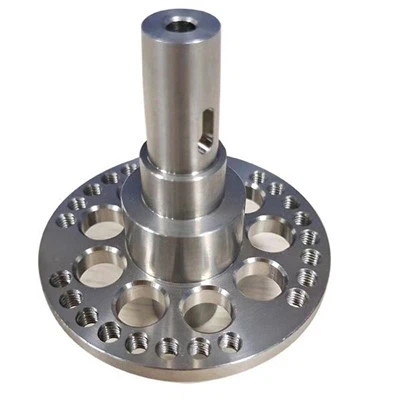
As a supplier of CNC milling parts, I’ve witnessed firsthand the remarkable capabilities of this manufacturing process. CNC (Computer Numerical Control) milling is a subtractive manufacturing method that uses computerized controls and rotating multi-point cutting tools to progressively remove material from a workpiece and create a custom-designed part. It’s widely used across various industries for its precision, repeatability, and versatility. However, like any manufacturing process, CNC milling parts production has its limitations. In this blog, I’ll explore some of these constraints to help you make more informed decisions when considering CNC milling for your projects. CNC Milling Parts
High Initial Investment
One of the most significant limitations of CNC milling parts production is the high initial investment required. Setting up a CNC milling operation involves purchasing expensive equipment. A basic CNC milling machine can cost anywhere from $10,000 to several hundred thousand dollars, depending on its size, capabilities, and precision. In addition to the machine itself, you need to invest in software for programming the machine, tooling, and fixtures. The software can be quite costly, especially if you need advanced features for complex part geometries.
Moreover, training your staff to operate and program the CNC milling machines is essential. This training can be time – consuming and expensive, as it requires skilled instructors and dedicated training time. For small businesses or startups with limited capital, this high initial investment can be a major barrier to entry into the CNC milling parts production market.
Limited Material Compatibility
While CNC milling can work with a wide range of materials, including metals (such as aluminum, steel, and copper), plastics, and wood, there are still some limitations in terms of material compatibility. Some extremely hard or brittle materials can pose challenges during the milling process.
For example, materials like tungsten carbide, which is very hard, can cause excessive tool wear. The cutting tools used in CNC milling need to be able to withstand the high forces and temperatures generated during the machining of hard materials. When machining tungsten carbide, the tools may wear out quickly, leading to increased tooling costs and reduced production efficiency.
On the other hand, brittle materials such as ceramics can be prone to cracking or chipping during milling. The high – pressure cutting forces involved in CNC milling can cause these materials to break, resulting in a high rate of defective parts. This not only increases production costs but also makes it difficult to achieve the required precision and surface finish.
Complex Geometries and Design Constraints
Although CNC milling is capable of producing complex parts, there are still some limitations when it comes to extremely intricate geometries. Some designs may have features that are difficult or impossible to machine using standard milling tools.
For instance, internal features with very small radii or deep, narrow cavities can be challenging to mill. The size and shape of the cutting tools limit the minimum radius that can be achieved inside a part. If the radius is too small, the tool may not be able to reach the required area, or it may break during the machining process.
Deep, narrow cavities also present problems because the chips generated during milling may not be able to escape easily. This can lead to chip congestion, which can cause damage to the part and the cutting tool. As a result, parts with such complex geometries may require additional manufacturing processes or specialized tooling, which can increase the cost and lead time of production.
Surface Finish and Tolerance Limitations
While CNC milling can achieve high – precision parts, there are still limitations when it comes to surface finish and tolerance. The surface finish of a milled part is affected by several factors, including the cutting speed, feed rate, tool geometry, and the material being machined.
Even with the best – optimized machining parameters, there may be some surface imperfections such as tool marks or roughness. Achieving a mirror – like surface finish using CNC milling alone can be very difficult and may require additional finishing processes such as polishing or grinding.
In terms of tolerances, although modern CNC milling machines can achieve very high precision, there are still some practical limitations. Factors such as machine vibration, thermal expansion, and tool wear can affect the accuracy of the machined part. For extremely tight tolerances, it may be necessary to use more advanced manufacturing techniques or perform additional inspection and adjustment steps, which can add to the cost and time of production.
Production Volume and Cost – Efficiency
CNC milling is generally more suitable for small to medium production volumes. For large – scale mass production, the cost per part can be relatively high compared to other manufacturing processes such as injection molding or die – casting.
The setup time for CNC milling is relatively long. Each time a new part design is introduced, the machine needs to be programmed, the tools need to be set up, and the workpiece needs to be fixtured. This setup time adds to the overall production cost, especially for small batch sizes.
In addition, the cost of tooling in CNC milling can be significant, especially for complex parts. With each part requiring a specific set of cutting tools, the tooling cost per part can be high for small production runs. As the production volume increases, the cost per part may decrease, but it may still not be as cost – effective as some other mass – production methods.
Waste Generation
CNC milling is a subtractive manufacturing process, which means that it involves removing material from a workpiece to create the desired part. This results in a significant amount of waste material.
The waste generated during CNC milling can be a concern from both an environmental and a cost – perspective. Disposing of the waste material properly can add to the overall production cost. Additionally, the raw material used in CNC milling needs to be large enough to accommodate the final part geometry, which means that there is often a substantial amount of excess material that is removed during the machining process.
Lead Time
The lead time for CNC milling parts production can be relatively long, especially for complex parts. As mentioned earlier, the setup time for programming the machine and setting up the tools can be time – consuming. In addition, the machining process itself can be slow, especially if the part has complex geometries or requires high precision.
If there are any design changes during the production process, it can further extend the lead time. The machine needs to be reprogrammed, and the tools may need to be adjusted, which can cause delays in the delivery of the final product.
Conclusion
Despite its many advantages, CNC milling parts production has its limitations. The high initial investment, limited material compatibility, challenges with complex geometries, surface finish and tolerance limitations, production volume and cost – efficiency issues, waste generation, and lead time are all factors that need to be considered when choosing CNC milling for your manufacturing needs.

However, it’s important to note that these limitations do not mean that CNC milling is not a viable option. In fact, for many applications, the precision, repeatability, and flexibility of CNC milling make it the ideal choice. By understanding these limitations, you can work with a knowledgeable supplier like me to optimize your part design, select the appropriate manufacturing process, and minimize the impact of these constraints.
Special Purpose Machinery If you’re considering CNC milling for your next project, I’d be more than happy to discuss your requirements in detail. Whether you need help with part design, material selection, or understanding the cost – effectiveness of CNC milling for your specific application, I’m here to assist you. Contact me to start a conversation about your CNC milling parts procurement needs, and let’s work together to find the best solution for your project.
References
- Groover, M. P. (2010). Fundamentals of Modern Manufacturing: Materials, Processes, and Systems. Wiley.
- Kalpakjian, S., & Schmid, S. R. (2009). Manufacturing Engineering and Technology. Pearson Prentice Hall.
Suzhou Huaquan Electromechanical Manufacturing Co., Ltd.
As one of the leading CNC milling parts manufacturers in China, we warmly welcome you to buy bulk customized CNC milling parts made in China here from our factory. If you have any enquiry about pricelist and free sample, please feel free to email us.
Address: No.7550 Mudong Road, Hengjing Town, Wuzhong District, Suzhou City, Jiangsu Province, China
E-mail: Huaquan2005@outlook.com
WebSite: https://www.huaquancnc.com/
