What is the vibration level of a Plastic Spiral Corrugated Pipe Machine during operation?
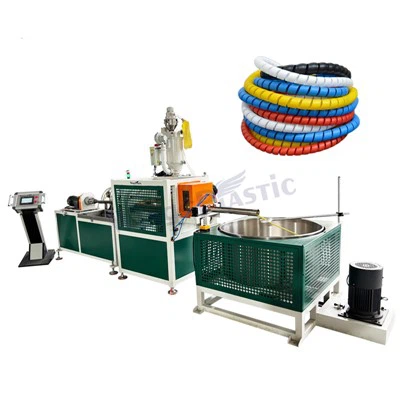
As a supplier of Plastic Spiral Corrugated Pipe Machines, I often receive inquiries from customers about various aspects of our machines, and one question that frequently comes up is about the vibration level during operation. In this blog, I will delve into this topic, exploring what the vibration level of a Plastic Spiral Corrugated Pipe Machine is, what factors can influence it, and why it matters. Plastic Spiral Corrugated Pipe Machine

Understanding the Vibration Level
The vibration level of a Plastic Spiral Corrugated Pipe Machine refers to the degree of mechanical oscillation that occurs while the machine is in operation. It is typically measured in terms of amplitude and frequency. Amplitude represents the maximum displacement of the vibrating part from its equilibrium position, while frequency refers to the number of oscillations per unit of time.
For a Plastic Spiral Corrugated Pipe Machine, a certain level of vibration is inevitable. The machine consists of various moving parts, such as motors, gears, and conveyor belts, which generate vibrations during operation. These vibrations can be transmitted through the machine’s structure and may affect its performance and the quality of the pipes produced.
In general, the vibration level of a well – designed and properly maintained Plastic Spiral Corrugated Pipe Machine should be within an acceptable range. Excessive vibration can lead to a series of problems, including premature wear and tear of machine components, inaccurate pipe dimensions, and even safety hazards.
Factors Influencing the Vibration Level
There are several factors that can influence the vibration level of a Plastic Spiral Corrugated Pipe Machine:
-
Machine Design and Manufacturing Quality
- A machine with a well – designed structure and high – quality manufacturing is less likely to produce excessive vibrations. For example, if the machine’s frame is not rigid enough, it may resonate with the vibrations generated by the moving parts, leading to increased vibration levels. Similarly, if the components are not precisely machined, they may not fit together properly, causing uneven forces and vibrations.
- The balance of rotating parts is also crucial. Imbalanced motors or gears can create centrifugal forces that result in significant vibrations. During the manufacturing process, strict quality control measures should be in place to ensure that all rotating parts are properly balanced.
-
Operating Conditions
- The speed at which the machine operates can have a significant impact on the vibration level. Generally, as the operating speed increases, the vibration level also tends to increase. This is because higher speeds generate more dynamic forces within the machine. For example, when the extruder of the Plastic Spiral Corrugated Pipe Machine is running at a high speed, the screw rotation can produce more intense vibrations.
- The load on the machine also matters. If the machine is overloaded, it may cause additional stress on the components, leading to increased vibrations. For instance, if too much plastic material is fed into the extruder at once, it can put extra pressure on the screw and other parts, resulting in higher vibration levels.
-
Maintenance and Lubrication
- Regular maintenance is essential for keeping the vibration level of the machine under control. Worn – out bearings, loose belts, or misaligned components can all contribute to increased vibrations. By regularly inspecting and replacing these parts, the vibration level can be effectively reduced.
- Proper lubrication is also crucial. Lubricants reduce friction between moving parts, which helps to minimize vibrations. If the lubrication is insufficient or the wrong type of lubricant is used, it can cause increased wear and tear and higher vibration levels.
Why the Vibration Level Matters
The vibration level of a Plastic Spiral Corrugated Pipe Machine is not just a technical detail; it has significant implications for both the machine’s performance and the quality of the pipes produced:
-
Machine Performance and Durability
- Excessive vibrations can cause premature wear and tear of machine components. For example, high – frequency vibrations can loosen bolts and nuts, leading to the misalignment of parts. Over time, this can result in the failure of critical components, such as motors or gears, which can be costly to repair or replace.
- By keeping the vibration level within an acceptable range, the machine’s lifespan can be extended, and the need for frequent maintenance and repairs can be reduced.
-
Pipe Quality
- The vibration level can also affect the quality of the plastic spiral corrugated pipes produced. Excessive vibrations can cause uneven wall thickness in the pipes, leading to reduced strength and durability. In addition, vibrations can also affect the surface finish of the pipes, making them less aesthetically pleasing.
- For applications where high – quality pipes are required, such as in the construction of underground drainage systems or telecommunications cable protection, maintaining a low vibration level is crucial to ensure the pipes meet the required standards.
-
Safety
- High – level vibrations can pose safety risks to operators. Excessive vibrations can cause the machine to become unstable, increasing the likelihood of accidents. For example, if a machine is vibrating violently, it may tip over or cause parts to fly off, endangering the operators.
Measuring and Controlling the Vibration Level
To ensure that the vibration level of a Plastic Spiral Corrugated Pipe Machine is within an acceptable range, it is necessary to measure and control it.
-
Measurement
- Vibration sensors can be used to measure the vibration level of the machine. These sensors can detect the amplitude and frequency of the vibrations and provide real – time data. By monitoring the vibration level over time, operators can identify any abnormal changes and take appropriate measures.
- Regular vibration testing can also be carried out during the machine’s installation and maintenance process. This helps to ensure that the machine is operating within the specified vibration limits.
-
Control
- To control the vibration level, several measures can be taken. As mentioned earlier, proper machine design, maintenance, and lubrication are essential. In addition, vibration dampers can be installed on the machine to absorb and reduce vibrations. These dampers work by converting the vibrational energy into heat energy, thereby reducing the amplitude of the vibrations.
- Adjusting the operating parameters, such as the speed and load, can also help to control the vibration level. By optimizing these parameters, the machine can operate more smoothly and with less vibration.
Plastic Spiral Corrugated Pipe Machine In conclusion, the vibration level of a Plastic Spiral Corrugated Pipe Machine is an important factor that affects its performance, the quality of the pipes produced, and the safety of the operators. As a supplier, we are committed to providing high – quality machines with low vibration levels. Our machines are designed and manufactured with strict quality control measures to ensure that they meet the highest standards. If you are interested in purchasing a Plastic Spiral Corrugated Pipe Machine or have any questions about the vibration level or other aspects of our machines, please feel free to contact us for a detailed discussion.
References
- Mechanical Engineering Handbook: Machinery Vibration and Noise, edited by Charles E. Wilson.
- Handbook of Plastics Processing Technology, by Rosato and Rosato.
Qingdao Wings Plastic Technology Co., Ltd.
As one of the most experienced plastic spiral corrugated pipe machine manufacturers and suppliers in China, we also support customized service. Please feel free to buy durable plastic spiral corrugated pipe machine made in China here from our factory. For price consultation, contact us.
Address: C02 Of Anshengyi Road, No.2 Fuan Industry Zone,Jiaodong Town, Jiaozhou City, Qingdao City, Shandong Province,China
E-mail: kelly@wingsplastic.com
WebSite: https://www.wingsextruder.com/
